
Likeable Person Test
Six everyday habits that make people glad you're around
8 min · Free · No account
What makes a person likeable?
Research on how we judge other people finds two questions come first: does this person mean me well, and can they act on it, known as warmth and competence (Fiske, Cuddy and Glick, 2007). Later studies found that in most situations moral character, such as honesty and keeping promises, counts for even more than friendliness (Goodwin, Piazza and Rozin, 2014). In daily life that shows up as asking about people, listening, sharing something real, keeping your word and admitting mistakes. This test scores six of those habits.
About this test
This likable person test (both spellings are correct) scores six habits separately: Curiosity about others (asking about people's lives and remembering what they said), Listening (attending without steering it back to you), Openness (letting people know you), Positivity (thanks and good faith rather than complaints and gossip), Reliability (keeping your word) and Humility (admitting mistakes and sharing credit). It describes what you say you do, not how other people see you.
What you'll discover
Curiosity about others
How often you ask people about their lives and remember what they told you.
Listening
How fully you attend while someone else is talking, without steering it back to you.
Openness
How much you let people know you: your feelings, your interests, your off days.
Positivity
The mood you bring: thanks, compliments and good faith rather than complaints and gossip.
Reliability
How well you keep your word, from turning up on time to keeping a secret.
Humility
How easily you admit mistakes, share credit and treat everyone as an equal.
Understanding the Likeable Person Test
The likeable person test gives you 48 statements, eight for each of six habits, and takes about 8 minutes. Your strongest habit is free when you finish. The full report scores all six, so you can see which habits people probably enjoy in you and which one you've let slide. Two statements per habit are phrased the other way round, so agreeing with everything doesn't get you a top score.
We picked habits that research links to being liked. Nancy Collins and Lynn Miller's review of the research found that people who share more personal things tend to be liked more, and that we come to like the people we have opened up to (Psychological Bulletin, 1994, doi:10.1037/0033-2909.116.3.457). In most situations, moral character, being honest and dependable, weighs more in how people judge us than friendliness does (Goodwin and colleagues, 2014, doi:10.1037/a0034726). Listening is less simple than it sounds: in one experiment, people who got active listening felt more understood than people who got advice, but they didn't rate the listener as more socially attractive than the person who gave advice (Weger and colleagues, 2014, doi:10.1080/10904018.2013.813234). The six habits and all the statements are ours; this is not a published questionnaire.
The biggest limit is that this test measures what you say you do, not how people see you, and people are poor judges of that. In studies by Erica Boothby and colleagues, people who had just talked with someone new consistently underestimated how much the other person liked them, and the gap lasted for months between first-year students sharing a dorm (Psychological Science, 2018, doi:10.1177/0956797618783714). The researchers called it the liking gap. If you're here because you feel nobody likes you, the research suggests you're liked more than you think.
Where the Likeable Person Test comes from
There is no single published model of likeability, so this test is our own construction from research on how people judge each other: Susan Fiske, Amy Cuddy and Peter Glick's account of warmth and competence as the two universal dimensions of social judgment (2007), Geoffrey Goodwin, Jared Piazza and Paul Rozin's finding that moral character usually weighs more than friendliness in first impressions (2014), and Nancy Collins and Lynn Miller's meta-analysis linking self-disclosure and liking (1994).
How the Likeable Person Test is scored
Six separate scores, one per habit, each the sum of eight statements, two of them reverse-worded, from 8 to 40. The habits and statements are eTestor's own and have not been checked against how other people actually rate you. That gap matters here: in Erica Boothby and colleagues' studies, people consistently underestimated how much their conversation partners liked them, so how likeable you rate your habits and how much you are liked can differ.
Popular framework with contested empirical support
Questions people ask
Is the likeable person test free?
Yes. The test and your strongest habit are free, with no account needed: just your email at the end. Every score, the written analysis and the certificate are in the full report: $1.99$2.41 in the first 30 minutes after you finish, $3.99$4.83 after that, or included in eTestor Unlimited.
Why do I feel like nobody likes me?
Partly because most people underestimate how much others like them. In Boothby and colleagues' 2018 studies, people left conversations thinking their partner liked them less than the partner really did, and the researchers called this the liking gap. If the feeling is constant and weighs on you, talking it through with someone you trust, or with a therapist, will help more than any quiz.
How can I be more likeable?
Start with the habit you scored lowest on, and change one moment rather than your whole personality. If it's curiosity, ask one follow-up question in your next conversation. If it's reliability, stop saying yes to things you won't get around to. If it's humility, say "I got that wrong" the next time you did. People notice small habits that repeat.
How is this different from the charisma test?
Charisma is about the impression you make in a room: presence, influence, wit. Likeability is about whether people are glad to have you around over months and years, which depends more on quiet habits like keeping your word and listening. Someone can be charismatic and not very likeable, and the other way round. The social skills test is different again: it scores how well you handle conversations and awkward moments.
Does this test show how other people see me?
No. It scores how you describe your own habits. To find out how you come across, ask two or three people who know you well which of the six habits they see in you, and compare their answers with your scores.
More Social & Cultural tests
Emotional Intelligence Test
Measure your EQ across 4 dimensions. 40 real-world scenarios.
8 min
Political Compass Test
Left or right? Libertarian or authoritarian? 48 statements place you on the two-axis political map.
10 min
Moral Foundations Test
Care, Fairness, Loyalty, Authority, Sanctity, Liberty — 48 statements map the six foundations of your moral mind.
10 min
Moral Dilemma Test: What Drives Your Choices?
Outcomes, rules, character, or context? 44 modern dilemmas reveal your moral framework.
10 min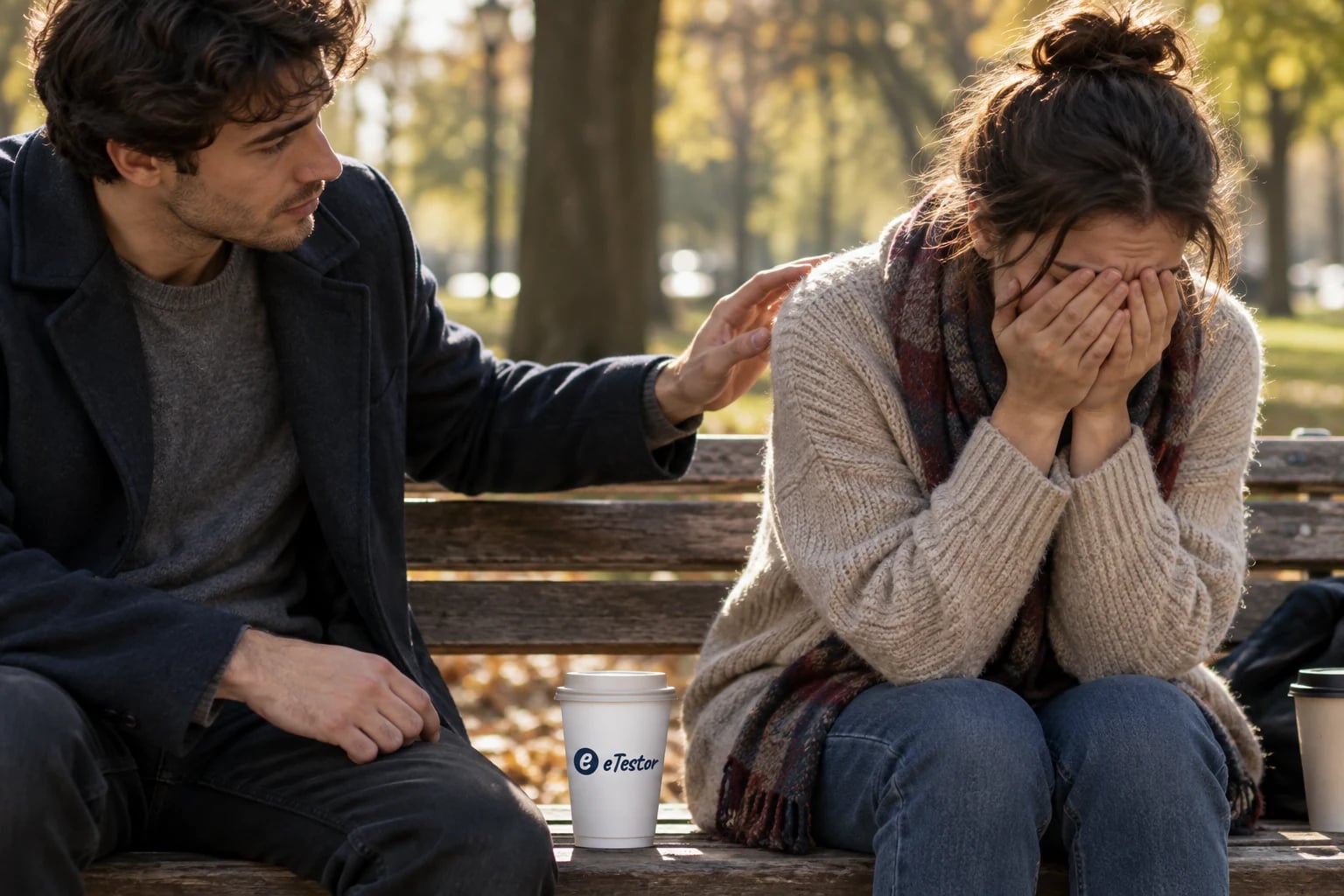
Empathy Test
Reading, feeling, helping, staying steady — 48 questions score all four sides of your empathy.
10 min
Assertiveness Test
Voice and boundaries — 40 statements measure whether you can speak up, ask plainly, and let your no stay a no.
8 min